Thursday, February 14, 2013

Siyasiya Irrigation Club


And finally, Siyasiya Village in Salima District. Yesterday we met the last group of irrigation farmers to be trained in 2013. Last but not least, this particular irrigation site is promising for the farmers and exciting for the AWP team.

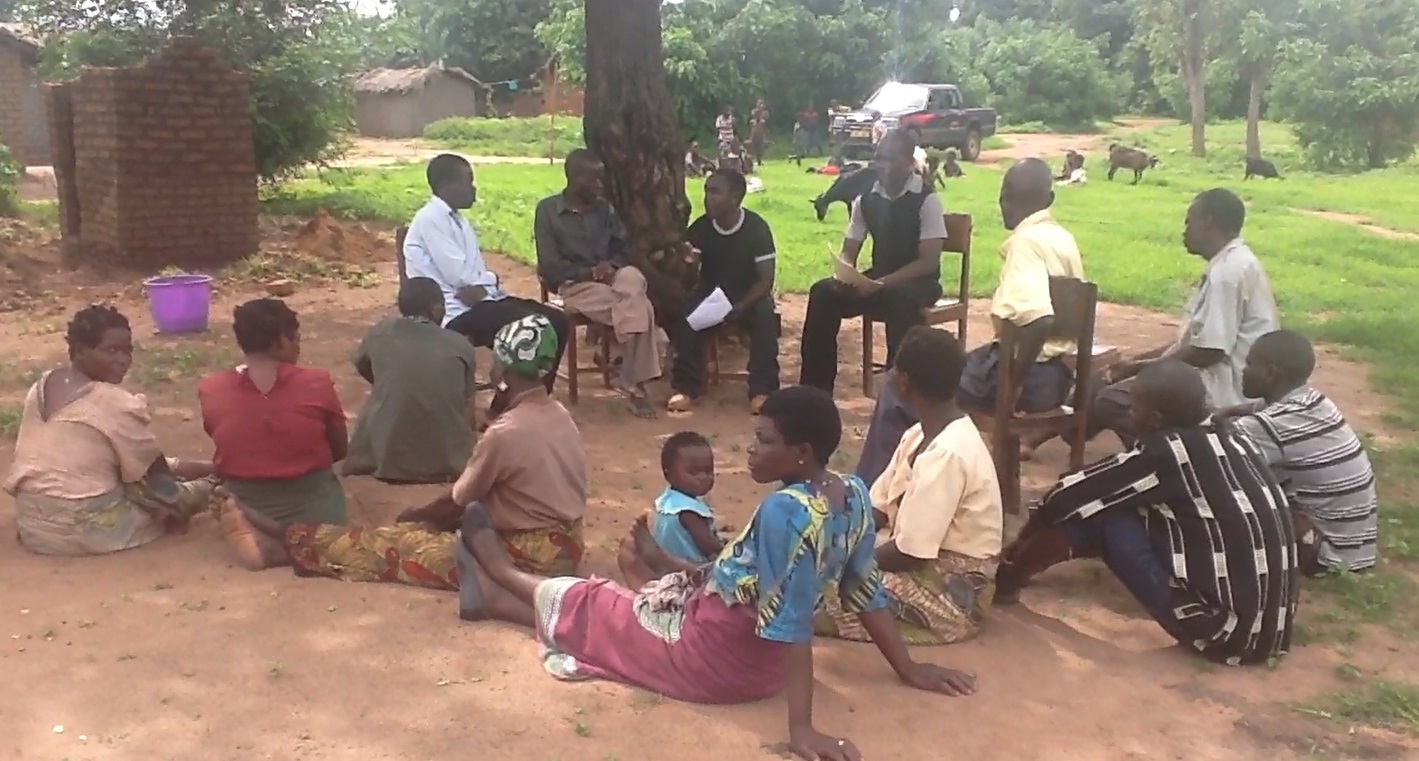
 First, just look at the turnout for the orientation meeting. The village was aware that only 15 farmers would be participating this year, but that did not seem to matter to the 60 or so others who showed up anyway.

The irrigation club was formed out of the Ministry Team of the local churches. The Ministry Team itself is a joint initiative of the churches and World Relief. In Salima district, World Relief has helped establish more than 20 similar ministry teams.

The AWP team knows how important good organization is for the success of community development projects, but having that organization as an extension of the local churches is more than we could have asked for, a true blessing.
The entire community have embraced the project and seem keen on diving into irrigation. We hope to deliver more than their expectations, a true blessing in return.

Tuesday, February 12, 2013

Mzindo Irrigation

It had just stopped raining in Mzindo families run to the village headman house to hold a meeting with him. The ten families remain standing waiting for traditional leader to come out. He comes out, and finds people with clothes dripping. One representative tells the chief about the irrigation farming. The farmers did not know that AWP had already met him to discuss irrigation farming in the area.
Later that day, AWP starts off on the 30 km drive to Mzindo village to hold the first meeting with farmers interested to participate in irrigation farming. AWP finds farmers sitting around a big tree with a big canopy that provides good shade to children, mothers, fathers and the aged. During the day, most people would converge around these trees to relax after working in the crop fields; play Bawo; listen to cases; attend village meetings; watch traditional dances like gule wamkulu and any other traditional activity.
This day, only adults sit around to hear what AWP has brought to the village. Children play in the tall grass nearby. The meeting begins with introductions and finishes with AWP telling farmers about sustainable irrigation farming and the water pumps that would help them to have improved crop yield each irrigation season. AWP asks the farmers for their commitment to an irrigation project in the area. This sends farmers into hand clapping and ululations.
One farmer rises up and tells AWP how they have had problems using watering cans to irrigate the crops; the activity of drawing water alone is tiresome as compared to the irrigation technology they saw in Mziza village, not far from their village. This farmer finishes by saying the introduction of hand cranked and pedal pumps for irrigation farming will help them to harvest more food in a year. The farmers want to be the beginners in learning the new concept of farming.

The meeting ends with a visit to a new site where the village headman has offered land for establishing an irrigation garden for other farmers within and the neighboring villages. 

Friday, February 1, 2013

Katsumwa Irrigation Project

The Katsumwa Irrigation Project is now under way, in partnership with Good Neighbours International.

There are 20 farmers in the irrigation club. All of them will be fully trained this year. Five of them, the lead farmers in the group, will be farming a 1-2 acre garden using AWP pedal pumps and a brick water reservoir. Next year those farmers should have raised the money and gathered the resources to implement irrigation gardens on their land, and each season a new group of five will be given the chance to use the club's demo garden for experience and the chance to raise their own funds.

The abandoned primary school makes a good classroom for our farmers:

Farmers gather in the classroom:

Participation yields a user friendly calendar for February: 

Fly on the Wall

If you were a fly on the wall at the AWP office today, you would be the fly most equipped to provide high-impact irrigation training in probably the whole of Malawi, even in all of Africa. Maybe you'd be the best six legged irrigation trainer in the WORLD!
Ok, not many irrigation experts to compare in the insect family, but if you were a human on the wall at AWP (get off the wall and have chair), I hope you and the rest of the staff present today would be ready to deliver some outstanding training sessions to farmers in the field.

Teaching a group of adults whose ages range over 40 years, who may or may not be able to read, who usually have heavy burdens put on hold outside the classroom, teaching such a group is no easy task. And you just try for ten minutes to focus with an empty stomach... no, didn't think so.

After a few hours spent discussing how our training programme should adapt to the particular challenges we face in the field, we came up with a short protocol to guide us. 
  1. Adults can only be expected to learn 5 simple things a day. If we selfishly take all those things for irrigation, we still should only expect 5 learned outcomes. Some things aren't so simple, so fewer expected outcomes is better.
  2. Good teachers deliver their outcomes over multiple routes; we should bring the learned outcomes through a variety of components: verbal/aural, visual (photographic/text), tactile, and participatory. These should be highly memorable and form memory indicators or associations.
  3. The visual and tactile elements should be left in the hands of the trainees to review/repeat in the future.
  4. We should hit the key memory indicators once more at the end of the training session.

Monday, January 28, 2013

January Update

Hello Friends of AWP!

January has been spent kicking off a series of new projects in Malawi. As such, we need to kick off the Blog for the year too!

First, we want to thank everyone who has been reading the blog. I know that people read the blog for different reasons, and providing a variety of content is one of our goals this year. We want to showcase our work, provide technical details for those who land on this blog in search of pump/tech designs, and raise awareness for food security and other local issues.

We have spent this month meeting the farmers who will be in training this year.

At Nathenje: a 15 member support group organized by National Association for People living with HIV and AIDS in Malawi (NAPHAM).

At Mzindo: 5 families organized under AWP through outreach conducted by the Mziza Farming Club.

Still to come: Katsumwa, Siyasiya and Kanyelele.

Monday, January 7, 2013

Guest Blogger Today

Guest Blogger Jessica Irvin from Defending the Fatherless  guest blogs today.  She and her family support Africa Windmill Project in many of ways.


As the 2012 Christmas season fades into another year of memories, I continue to be bothered by a brief, 6 or 7 second news clip that my husband and I saw late one night in early December.
By most accounts, it was a heart warming moment-the result of one women’s kindness to a child—a child she would never meet, but was thoughtful enough to consider.  We’ve seen it played out before, probably participated in a similar activity at one time or another.  And, please don’t misunderstand my point-this woman was doing nothing wrong-in fact she was doing everything right by our cultural standards and norms. Yet, the words that she spoke have stuck with me in a way that I can only describe as nails on a chalk board.  It stopped me in my tracks.
The scene was of a jolly middle aged woman, hands full of shopping bags loaded with Christmas treasures, happily donating a gift to a child via a local charity who may otherwise not receive a gift on Christmas morning.  The phrase that made my heart beat a little faster, “It feels good to give to a child in need.”
Seems harmless enough and it’s true.  It does feel good to give to someone in “need.” 
What got me is that we had just returned home a few weeks prior to viewing this clip with our little son from Ethiopia, once in “need” of a family and now forever in our arms.  
I had just witnessed NEED beyond understanding.  True need—like for the basics—for things like water that doesn’t cause illness, food that satisfies a hunger that has often been growing for days, clothing and shelter and access to basic medical care to treat diseases easily treated here that devastate whole nations across the world-need for the things that so many of us (myself included) so often take for granted.
I looked at my husband and said, “We think toys are a NEED in America.”
And it broke my heart.  


We bought (literally) into this myth somewhat as each of our children received a couple of new items this Christmas, and with the exception of the toothpaste in their stockings (and I suppose one could make a case for whether or not that is truly a need), none of the new items were necessary for their health, well being or physical development.  None of the items sustained life or gave life.  None of the items had the potential to impact families or even whole communities.
Just as the Father loves to give good gifts to his children, we too enjoy seeing the faces of our children light up when presented with a gift.  I’m not trying to take away from that, but to instead call to our attention that others suffer when we chose to add to our excess instead of, as the bible commands, share with God’s people who are in need (Romans 12:13). 
And there are so many around the world in true need of the most basic resources, with probably the most important of these being clean water.


When I return home from Africa, I’m always a bit shell shocked upon reentry.  I always say it is harder to return home than to return to Africa.  I catch myself thinking thoughts like, “the water I shower with is cleaner than what they have to drink” or “I wash my clothes (well, technically the machine does) in cleaner water than they have available for cooking” or “I simply turn on one of my six faucets and clean water pours out while they hike 6 miles a day to the nearest water source.”  And, none of it can be reconciled in my head except if I am willing to do something to make a difference.
I have seen first hand how life changing access to clean water is for a child, a family, and for entire communities. 


Africa Windmill Project (AWP) works along side the people of Malawi to equip them to make these changes available to them. By educating and supporting rural farmers on how to irrigate crops via simple and affordable water pumps, Malawians are able to work to feed and care for their families.  AWP also works to educate and train the local people on how to maintain clean drinking water, sustainable agriculture practices, and community development-all with the focus of Malawians being self-sufficient and duplicating the model within their own country.


Now, that’s something to feel good about.
To learn more about or partner with AWP as they help empower the people of Malawi to meet their NEEDS, please visit Africa Windmill Project.
Give, and it will be given to you. A good measure, pressed down, shaken together and running over, will be poured into your lap. For with the measure you use, it will be measured to you." Luke 6:38