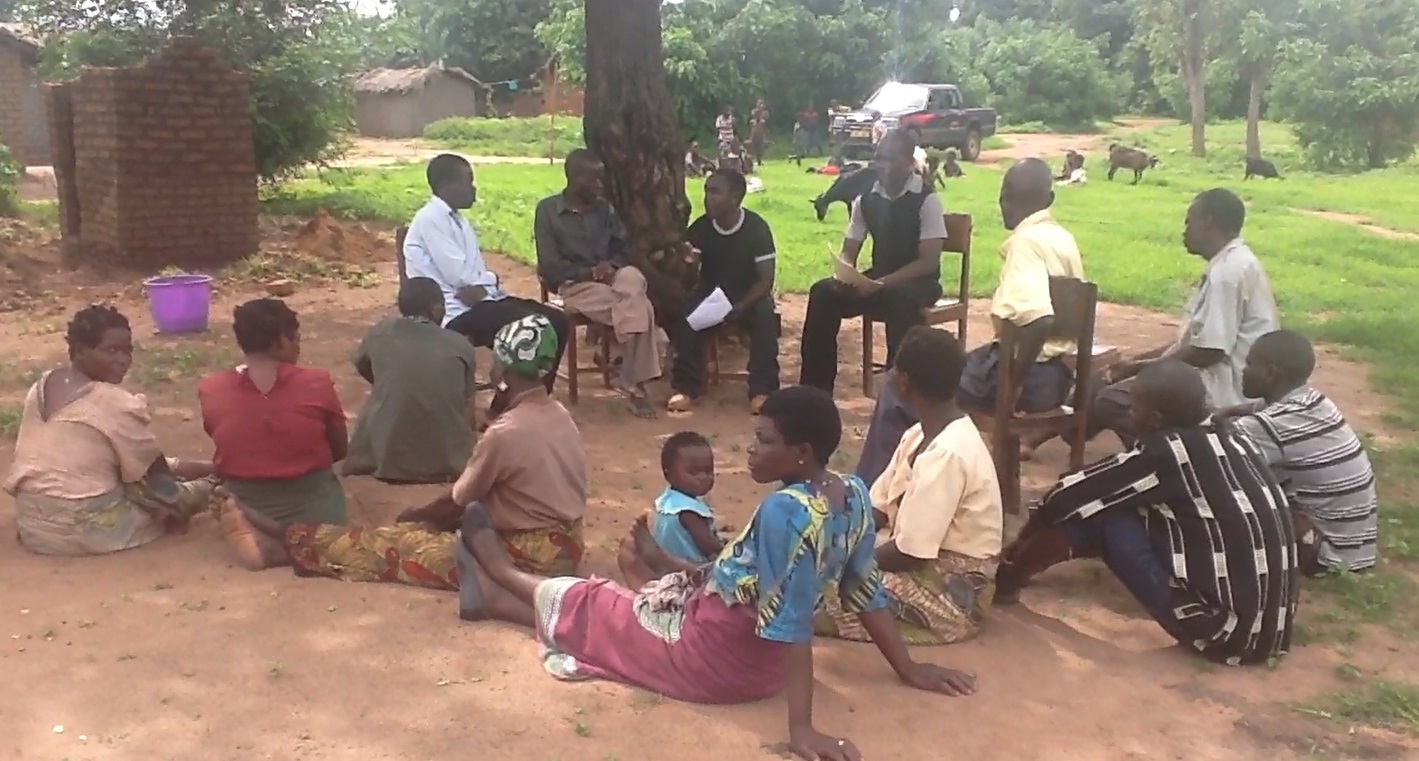
Our latest training in compost making.
Showing posts with label AIDs. Show all posts
Monday, February 25, 2013
Monday, January 28, 2013
January Update
Hello Friends of AWP!
January has been spent kicking off a series of new projects in Malawi. As such, we need to kick off the Blog for the year too!
First, we want to thank everyone who has been reading the blog. I know that people read the blog for different reasons, and providing a variety of content is one of our goals this year. We want to showcase our work, provide technical details for those who land on this blog in search of pump/tech designs, and raise awareness for food security and other local issues.
We have spent this month meeting the farmers who will be in training this year.
At Nathenje: a 15 member support group organized by National Association for People living with HIV and AIDS in Malawi (NAPHAM).
Still to come: Katsumwa, Siyasiya and Kanyelele.
January has been spent kicking off a series of new projects in Malawi. As such, we need to kick off the Blog for the year too!
First, we want to thank everyone who has been reading the blog. I know that people read the blog for different reasons, and providing a variety of content is one of our goals this year. We want to showcase our work, provide technical details for those who land on this blog in search of pump/tech designs, and raise awareness for food security and other local issues.
We have spent this month meeting the farmers who will be in training this year.
At Nathenje: a 15 member support group organized by National Association for People living with HIV and AIDS in Malawi (NAPHAM).
At Mzindo: 5 families organized under AWP through outreach conducted by the Mziza Farming Club.
Still to come: Katsumwa, Siyasiya and Kanyelele.
Labels:
Africa,
agriculture,
AIDs,
Farming,
HIV,
irrigation,
teaching,
Villages
Friday, November 16, 2012
Community leaders are the change makers... not us..
In Jafet, the Mziza farming club have a leader who motivates by example. Whenever a club member is disheartened and says, "I cannot do this!", Jafet is there to say "Yes you can! I have done it and I will help you!"
In September, Jafet told us that he had sold MK96,000 ($350) in vegetables in 2011, and expected to make MK150,000 ($475) to MK200,000 ($700) in 2012, on irrigation farming only. He also has an income from rainy season crops. And these two income sources have a synergizing effect, as each provides capital to improve the other. And the monetary value of the crops doesn't account for the nutritional benefits to his household. And he teaches other farmers to do the same. And.. And... And.... Can you tell we are proud of amazed by Jafet?
Other leaders in the agriculture sector face the challenge of being seen as part of an out-group that cannot understand the farming processes of the village. University students, government extension workers, NGOs, commercial farmers, and, perhaps most of all, whites, cannot effectively motivate farmers because they lack the common ground of poverty, subsistence farming, village life, and cultural background. So what do all these well-meaning leaders do? One successful technique is to motivate slow change through identifying and promoting positive deviance.
Positive deviance is a deviation from group norms that results in positive outcomes. For example, in a local culture that promotes marriage for girls 14 years of age, a girl whose family encouraged her to complete school before marriage might have a more sanitary home and provide healthier food to her own children. This is positive deviance. It is the seed of change in the community that only needs to grow; that is, it's not planted from outside. Because the deviant practice was already present in the community, it can be passed on without the resistance faced by alien practices.
So here's Jafet, a noted farmer who has adopted a new method of irrigation. But it was not this new method alone that has given him success: he completed all 12 years of school, he keeps records and saves money, and he maintains a strict working schedule. He would be a successful farmer with almost any method. Of course, the better the method, the better he will do, but as I noted in a previous post, he's going to take his opportunities and run them out to their potential no matter what.
Jafet is in the process of constructing a house for his oldest son, one of the surest signs of wealth in this culture. Oh yeah, and he's renovating his own house by adding a new kitchen and sheet metal roof. By the time his sons house is ready, he hopes to be able to afford metal sheets for that roof as well.
He's not the only one: Mr. Storo grew maize and was able to send one of his daughters to secondary school for the first time in 3 years. Mr. Matenga was able to buy a brand-new bicycle (think: promotion = buy a sports car, only a bicycle is far more useful). While their success may not be as flashy, dozens of others have achieved food security following last years minor drought and light harvest.
Farmers are still planting on irrigation in advance of the rains. This crop will finish under rains in January. Another crop will be started with the rain and finished with pump irrigation.
Saturday, November 10, 2012
More about our beekeeping initiative...

In Sub-Saharan Africa, most farmers living in the rural areas take agriculture as their livelihood. In Malawi, a variety of agricultural activities happen in these areas and yet very few farmers know about integrating the various activities. Most farmers have little information regarding the practice of combining agriculture farming systems. Things have been like this for a long time just because most agriculture extension officers put much emphasis on encouraging farmers to grow crops that would immediately benefit them. As such, most farmers concentrate on these crops and realize little benefits at the end of that particular growing season.

Africa Windmill Project in Malawi put on board a new tune for farmers interested in partaking in sustainable irrigation farming. Since 2012, AWP has been figuring out how best farmers could fully benefit from irrigation farming which in most areas takes place in April-October, the period during which most farmers fall into temptations of selling the available few food crops. As you can see, this is a short period where an individual farmer is expected to make use of the available agriculture resources to make food and money available at the household level. The challenge is further experienced, when it comes to sourcing seeds for irrigation farming. Farmers are tempted to sell food crops (which are supposed to take them up to the next rain fed farming) to purchase seeds. This has been an observed problem in most areas and including our implementation areas.

To take care of the problem, the we have introduced beekeeping in Mziza and Mwankhundi villages. The organization offered 5 bee hives to 25 farmers as one way of diversifying income generating sources for farmers participating in irrigation farming. These bee hives were made by Africa Windmill Project and hanged in August this year. It was noticed this month that the bee hives have bees and farmers just waiting to harvest first honey probably by January. AWP would like to see farmers using honey as an alternative for sugar which is currently expensive to local farmers; sell some and use the money for purchasing seeds at the primary phase of the irrigation farming. In the long run , AWP will facilitate village savings among her beneficiaries and make sure that they are able to buy more beehives for themselves. In this case, farmers will have sufficient money for purchasing seeds during irrigation farming and also be able to meet some household needs-hence continue to experience sustainable livelihood.
Windmill now in play at the demo garden

Technologies are there to help people work efficiently and effectively in any sector of development. In irrigation development, so many technologies have been developed to assist in irrigation farming. However, the drawback has been that these technologies have kept on demanding man power when it comes to operating the technology and frequent attention. Farmers in rural communities do face the hustles and hurdles of operating these kinds of irrigation technologies. The time and energy spent on operating these technologies could be of use in quality establishment of an irrigation system. Africa Windmill Project is in Malawi to take care of problems faced by farmers interested to embark on irrigation farming. The organization is developing irrigation technologies that could be of profound help to medium to small scale irrigation farmers. One of the irrigation technologies that can perform wonders for irrigation farmers is the wind water pump.
check out the video: Amazing Windmill
The picture you see above is a wind powered water pump developed by Africa Windmill Project in Malawi and placed at the our irrigation demonstration plot. The water pump is made out of bamboos (60%), blue gum pole, few steel (at pivotal point, nails and wire,), reused materials (5l and 25 liter containers and glass bottles) and plastic pipes and polyethylene sacks. The pump auto-operates under the influence of winds. As the winds blow, all four panels swirl towards one direction, forcing the rope with washers to rotate also. As the rope is rotating, washers tied to the rope at intervals pump water inside the pump carrying it through to the outlet pipe. In the AWP irrigation demonstration plot, the outlet pipe exit water into the irrigation reservoir tank. The pump is highly effective. It pumps water, every time the wind blows at the four panels. The more the wind blows, the faster the water resource is drained. In other words, the flow rate of the pump is equaled to recharge rate of the well. The wind powered water pump is designed to pump water into the reservoir. This is the technology that if properly improved on will help in irrigation development and assist in reducing the effect of food insecurity and financial insufficiency in rural households.
Wednesday, October 31, 2012
Bees have moved in...
Monday, October 29, 2012
Demo garden helps farmers understand what it takes...

When good things avail, the first eye witness calls other to see. But also there is an adage in Africa, which says it is not good to continually provide fish for the children but rather teach them how to catch fish. Africa Windmill Project has emulated from the adage a program based on teaching not giving. AWP is set to share the whole concept of the developed irrigation technologies and help the rural communities.

Blessing Malamba explains to farmers how beneficial the technologies are, and how individual farmers can use, maintain, and afford them. It has been just a few years and yet AWP is making strides in the areas the project is being implemented. Most farmers who have been using watering cans, treadle pumps, or motorized pumps are continually visiting Africa Windmill Project demonstration garden to see for themselves the system that other farmers who have visited the demo narrate in other villages.

To farmers, the irrigation technology is now a readily available to answer the challenges faced in previous irrigation farming. Farmers who happen to visit the demonstration garden become amazed with technology and how it is helping farmers in Mziza. To date, more than 200 farmers have visited the demo, learning the benefits and methods of sustainable irrigation.
Wednesday, October 17, 2012
Kids having fun
Pempero and Ganizani live in Mwankhundi village where Africa Windmill Project started implementing a project together with the farmers in the community.

Dorothy Chisale, Pempero and Ganizani's mother, happened to be one of the first farmers to use the irrigation pump. When Dorothy, who is a single mother, got the pump, she used to protect it so that children should not tamper with it. However, children could always go behind her back and pump water in the garden. Sometimes, when she would go to her garden for watering, she would find that her crops had already been watered. Several times she would argue with her children but to no avail. Finally she hid in the nearby bush to wait and see who was pumping the water.
To her surprise, she saw her own children looking here and there while heading for the pump. She didn’t panic; she hid still to see what was going to happen. What did she see then? Her children were helping each other: one was pumping water, and the other was guiding water to irrigate the beds. She quietly came out and her children were about to run; but she stopped them. She instructed them to be extra careful when operating the water pump. From that time, these children help their mother at her irrigation garden. They like watering the vegetables so much.
Dorothy is now a happy woman. When she is busy with church and community activities, she does not get worried with her crops; children are always there to help- irrigating crops with fun. The family planted maize in July and they will be eating green maize in November.

Dorothy Chisale, Pempero and Ganizani's mother, happened to be one of the first farmers to use the irrigation pump. When Dorothy, who is a single mother, got the pump, she used to protect it so that children should not tamper with it. However, children could always go behind her back and pump water in the garden. Sometimes, when she would go to her garden for watering, she would find that her crops had already been watered. Several times she would argue with her children but to no avail. Finally she hid in the nearby bush to wait and see who was pumping the water.
To her surprise, she saw her own children looking here and there while heading for the pump. She didn’t panic; she hid still to see what was going to happen. What did she see then? Her children were helping each other: one was pumping water, and the other was guiding water to irrigate the beds. She quietly came out and her children were about to run; but she stopped them. She instructed them to be extra careful when operating the water pump. From that time, these children help their mother at her irrigation garden. They like watering the vegetables so much.
Dorothy is now a happy woman. When she is busy with church and community activities, she does not get worried with her crops; children are always there to help- irrigating crops with fun. The family planted maize in July and they will be eating green maize in November.
Thursday, October 11, 2012
Then and Now
Friday, October 5, 2012
Irrigation Season
Irrigation season in Malawi runs approximately from April through November. With the labour competition from rain-fed gardens, most farmers wind up irrigation activities in October, leaving November the remaining weeks in the dry season for weeding and ridging.
I think it's appropriate then to highlight some of the remarkable achievements of irrigation farmers in Mziza and Chibanzi. For today, let's take a look at Irrigation Club Chairman Jafeti.
The Semi-commercial Opperator

Jafeti has taken the idea of small, sustainable irrigation and run it out to its maximum potential. He's now irrigating half an acre himself, while his wife and family take care of another quarter acre. He's an innovator, too. When the maximum potential for his plot doesn't meet his goals, he simply increases the maximum potential somehow, by creating multiple pumping locations for example. Apparently he doesn't understand the meaning of maximum... Or the difference between potential and actual, for that matter.

He has gone beyond the label subsistence farmer, to semi-commercial grower. Why put the qualifier "semi-" in there? Because he doesn't grow for commercial markets exclusively. He provides food for himself, his family and extended family, and his village. He earns money to send his kids to school, maintain his house, and provide for emergencies.

Jafeti is a very good farmer and we hope he can become a very good farming teacher in his community. We are thankful to have worked with him.
I think it's appropriate then to highlight some of the remarkable achievements of irrigation farmers in Mziza and Chibanzi. For today, let's take a look at Irrigation Club Chairman Jafeti.
The Semi-commercial Opperator

Jafeti has taken the idea of small, sustainable irrigation and run it out to its maximum potential. He's now irrigating half an acre himself, while his wife and family take care of another quarter acre. He's an innovator, too. When the maximum potential for his plot doesn't meet his goals, he simply increases the maximum potential somehow, by creating multiple pumping locations for example. Apparently he doesn't understand the meaning of maximum... Or the difference between potential and actual, for that matter.

He has gone beyond the label subsistence farmer, to semi-commercial grower. Why put the qualifier "semi-" in there? Because he doesn't grow for commercial markets exclusively. He provides food for himself, his family and extended family, and his village. He earns money to send his kids to school, maintain his house, and provide for emergencies.

Jafeti is a very good farmer and we hope he can become a very good farming teacher in his community. We are thankful to have worked with him.
Sunday, September 2, 2012
The "Aha! moment"
In 7th grade I had a math teacher who said that rather than teach for the standardized tests, she teaches for the "Aha! moment". She was a good teacher, and we all learned a lot from her, about geometry and algebra, but the teaching philosophy most importantly. The "Aha! moment" is the moment when a person realizes they know what they are doing. In other words, the teacher may give us information, and we (lifelong students) may possess that information, but what is important is that we know that we know it.
And what signifies (to the teacher) that we have this knowledge? Some people exclaim "Aha!", but the surest sign is when the student corrects a teacher's mistake. It takes a good teacher to realize that being corrected by students is a good thing.
Some recent field days with farmers at Mziza have driven this point home.
What is causing the low water flow out of this pump?

AWP hypothesis: low rpm caused by bad gearing
Farmer's hypothesis: broken or bent washers caused by slack in the rope
Answer: improperly sized washers used to replace broken washers
One to the student... Of course, if we teachers had followed our own method, we should have come to the same hypothesis as the farmer.
What is causing low germination rate in this maize field?

AWP hypothesis: insufficient water
Farmer's hypothesis: mice
Answer: probably mice, as the problem ceased after burning out the mice holes.
Two lessons the teacher should take away from this:
1) follow your own method, and start with the simplest analysis.
2) local wisdom is exceptionally wise in its own locale; heed its advice.

Farmers are getting irrigation now. There is an intuitive understanding of how to use the water pumps, how to design and cultivate the garden, and how to plan their farming activities.

The next step, we hope, is that those who have excelled may start teaching others, first time irrigators and those who are struggling at some point in the process.
And what signifies (to the teacher) that we have this knowledge? Some people exclaim "Aha!", but the surest sign is when the student corrects a teacher's mistake. It takes a good teacher to realize that being corrected by students is a good thing.
Some recent field days with farmers at Mziza have driven this point home.
What is causing the low water flow out of this pump?

AWP hypothesis: low rpm caused by bad gearing
Farmer's hypothesis: broken or bent washers caused by slack in the rope
Answer: improperly sized washers used to replace broken washers
One to the student... Of course, if we teachers had followed our own method, we should have come to the same hypothesis as the farmer.
What is causing low germination rate in this maize field?

AWP hypothesis: insufficient water
Farmer's hypothesis: mice
Answer: probably mice, as the problem ceased after burning out the mice holes.
Two lessons the teacher should take away from this:
1) follow your own method, and start with the simplest analysis.
2) local wisdom is exceptionally wise in its own locale; heed its advice.

Farmers are getting irrigation now. There is an intuitive understanding of how to use the water pumps, how to design and cultivate the garden, and how to plan their farming activities.

The next step, we hope, is that those who have excelled may start teaching others, first time irrigators and those who are struggling at some point in the process.
Labels:
Africa,
Aha,
AIDs,
beekeeping,
compost,
conservation agriculture,
design,
Drinking Water,
ECHO,
Farming,
health,
HIV,
hunger,
irrigation,
Malawi,
philosophy,
rope and washer pump,
teaching,
windmill
Thursday, August 23, 2012
Keeping bees, diversifying income
Farmers we work with regularly live hand-to-mouth. Whatever they have, it's only enough for today, if even that. Tomorrow, they will go out to their fields to get some more food, they will go to the market to sell a handful of tomatoes to afford a bar of soap, or they will simply beg from a neighbour.
One thing that can help a farmer to get his head above water long enough to save and plan for the future is to diversify his income. A farmer who relies entirely on one small irrigated garden may produce enough food for his household, but what about school fees? Clothes? Medicine?
Africa Windmill Project is introducing bee keeping to the Mziza farming club. The club will share 5 beehives to start with, and expand later out of proceeds from selling honey. The benefits of beekeeping are threefold: first, there is the income from selling honey; second, the nutritional benefit of eating the honey; and third, the bees will help pollinate crops. Oh yes, and the farmers will be encourage to conserve their forests. And also, they may use the beeswax to make candles or soap. OK, so that was fivefold... and the benefits only get better as the farmers make more hives.
The club should bring enough money to purchase one new hive for each one they harvest. 5 become 10 become 20, 40, 80... within about 18 months. The limiting factor is of course space to hang them. This is where forest conservation becomes worth doing, so to speak. Without growing their forests, the farmers cannot grow their collection of hives.
Labels:
Africa,
AIDs,
apiculture,
beekeeping,
bees,
compost,
conservation agriculture,
ECHO,
Farming,
health,
HIV,
hunger,
irrigation,
Malawi,
Mziza,
need,
rope and washer pump,
Safe Water,
Solar,
windmill
Tuesday, April 5, 2011
Enabling families in the US to HELP families in Africa
A Truck.
Our current transport is pictured here. We call it the "goat" named because the horn is broken and sounds like a sick goat when used (which is often, because, well, it's Malawi).
We love the gas mileage this car gets, but used parts that we can find to fix it have about 10% of their life left. We have rebuilt and re-rebuilt this car. The villages we work in are not located on roads, speed bumps here in the US are nothing compared with the creeks, ditches and other obstacles that stand in our path when trying to reach our sites. Also, now that the farmers are seeing success they need to be able to take crops to market, which is more than a days walk in some cases.
When I asked Christopher if he would write a blog about this pressing need, this was his response...
"I will try to get a blog post up about the distance and conditions of the villages. I think one thing to remind the donors is that this will directly impact the people we are working with. Supplies will arrive on time and in 1 trip (rather then 5 or 6 different trips) and we will be able to search out new markets for their crops. Also the truck will help us in the future be able to reach villages farther from town that are neglected by support organizations and government programs"
So, if you are willing to donate money towards this need,
PLEASE go to www.africawindmill.org/donate.html or mail a check to Africa Windmill Project 2869 Carew Avenue, Winter Park, FL 32789 c/o John Drake (make all checks payable to Africa Windmill Project).
You will be directly impacting farmers and their childrens lives in Africa. Thank you for your generosity. We appreciate you!
Labels:
Africa,
AIDs,
conservation agriculture,
Farming,
HIV,
hunger,
irrigation,
Malawi,
need,
Villages,
water quality
Subscribe to:
Posts (Atom)