Monday, January 28, 2013

January Update

Hello Friends of AWP!

January has been spent kicking off a series of new projects in Malawi. As such, we need to kick off the Blog for the year too!

First, we want to thank everyone who has been reading the blog. I know that people read the blog for different reasons, and providing a variety of content is one of our goals this year. We want to showcase our work, provide technical details for those who land on this blog in search of pump/tech designs, and raise awareness for food security and other local issues.

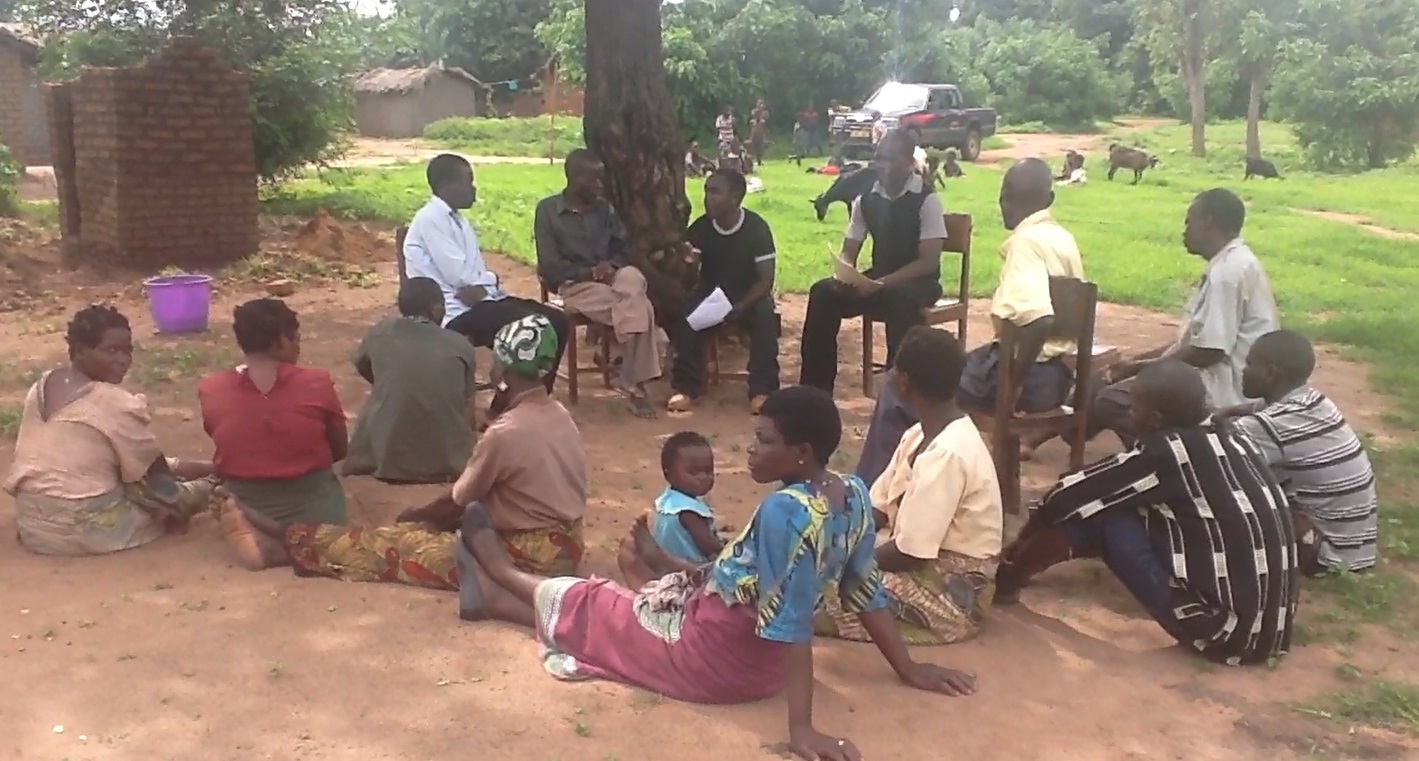
We have spent this month meeting the farmers who will be in training this year.

At Nathenje: a 15 member support group organized by National Association for People living with HIV and AIDS in Malawi (NAPHAM).

At Mzindo: 5 families organized under AWP through outreach conducted by the Mziza Farming Club.

Still to come: Katsumwa, Siyasiya and Kanyelele.

Monday, January 7, 2013

Guest Blogger Today

Guest Blogger Jessica Irvin from Defending the Fatherless  guest blogs today.  She and her family support Africa Windmill Project in many of ways.


As the 2012 Christmas season fades into another year of memories, I continue to be bothered by a brief, 6 or 7 second news clip that my husband and I saw late one night in early December.
By most accounts, it was a heart warming moment-the result of one women’s kindness to a child—a child she would never meet, but was thoughtful enough to consider.  We’ve seen it played out before, probably participated in a similar activity at one time or another.  And, please don’t misunderstand my point-this woman was doing nothing wrong-in fact she was doing everything right by our cultural standards and norms. Yet, the words that she spoke have stuck with me in a way that I can only describe as nails on a chalk board.  It stopped me in my tracks.
The scene was of a jolly middle aged woman, hands full of shopping bags loaded with Christmas treasures, happily donating a gift to a child via a local charity who may otherwise not receive a gift on Christmas morning.  The phrase that made my heart beat a little faster, “It feels good to give to a child in need.”
Seems harmless enough and it’s true.  It does feel good to give to someone in “need.” 
What got me is that we had just returned home a few weeks prior to viewing this clip with our little son from Ethiopia, once in “need” of a family and now forever in our arms.  
I had just witnessed NEED beyond understanding.  True need—like for the basics—for things like water that doesn’t cause illness, food that satisfies a hunger that has often been growing for days, clothing and shelter and access to basic medical care to treat diseases easily treated here that devastate whole nations across the world-need for the things that so many of us (myself included) so often take for granted.
I looked at my husband and said, “We think toys are a NEED in America.”
And it broke my heart.  


We bought (literally) into this myth somewhat as each of our children received a couple of new items this Christmas, and with the exception of the toothpaste in their stockings (and I suppose one could make a case for whether or not that is truly a need), none of the new items were necessary for their health, well being or physical development.  None of the items sustained life or gave life.  None of the items had the potential to impact families or even whole communities.
Just as the Father loves to give good gifts to his children, we too enjoy seeing the faces of our children light up when presented with a gift.  I’m not trying to take away from that, but to instead call to our attention that others suffer when we chose to add to our excess instead of, as the bible commands, share with God’s people who are in need (Romans 12:13). 
And there are so many around the world in true need of the most basic resources, with probably the most important of these being clean water.


When I return home from Africa, I’m always a bit shell shocked upon reentry.  I always say it is harder to return home than to return to Africa.  I catch myself thinking thoughts like, “the water I shower with is cleaner than what they have to drink” or “I wash my clothes (well, technically the machine does) in cleaner water than they have available for cooking” or “I simply turn on one of my six faucets and clean water pours out while they hike 6 miles a day to the nearest water source.”  And, none of it can be reconciled in my head except if I am willing to do something to make a difference.
I have seen first hand how life changing access to clean water is for a child, a family, and for entire communities. 


Africa Windmill Project (AWP) works along side the people of Malawi to equip them to make these changes available to them. By educating and supporting rural farmers on how to irrigate crops via simple and affordable water pumps, Malawians are able to work to feed and care for their families.  AWP also works to educate and train the local people on how to maintain clean drinking water, sustainable agriculture practices, and community development-all with the focus of Malawians being self-sufficient and duplicating the model within their own country.


Now, that’s something to feel good about.
To learn more about or partner with AWP as they help empower the people of Malawi to meet their NEEDS, please visit Africa Windmill Project.
Give, and it will be given to you. A good measure, pressed down, shaken together and running over, will be poured into your lap. For with the measure you use, it will be measured to you." Luke 6:38

Monday, December 3, 2012

Irrigation Students at Natural Resources College


On the afternoon of 26 November, the lecture theater at Natural Resources College (NRC) was full with irrigation students and their lecturers awaiting a presentation on irrigation technology by Africa Windmill Project staff. The opportunity for the presentation came about after the lecturers visited AWP irrigation demonstration garden and were impressed with the irrigation technology.

NRC offers various courses regarding natural resources and agriculture. The irrigation course is relatively new to the college, having started just a few years ago. With tight budgets and few hands-on opportunities, students only get familiar with irrigation technologies by visiting the much larger agricultural college, Bunda College, or possibly by visiting Ministry of Irrigation sites within a few kilometers radius.

AWP shared with the students how the technologies are developed, the amount of water they pump, the maximum effective acreage for each pump, and the cost. Students gave feedback on the design and implementation of the irrigation schemes. Among many good points, they brought up the potential cultural challenges for women to use a cycling pump. They suggested that we make a few changes that could better accommodate the lady farmer.

At the end of the presentation, the students had a chance to see a pedal pump in action. The pump had to be set up without a well, which led us to pump only a modest one meter of head. Nonetheless, the students were able to ask questions and try out the pump, putting a practical spin on the course material they have been studying.

We hope that the students may have a chance to come out to our demo garden next year to get their hands dirty with their fellow farmers at Mziza. 

Friday, November 16, 2012

Community leaders are the change makers... not us..

In Jafet, the Mziza farming club have a leader who motivates by example. Whenever a club member is disheartened and says, "I cannot do this!", Jafet is there to say "Yes you can! I have done it and I will help you!"

Other leaders in the agriculture sector face the challenge of being seen as part of an out-group that cannot understand the farming processes of the village. University students, government extension workers, NGOs, commercial farmers, and, perhaps most of all, whites, cannot effectively motivate farmers because they lack the common ground of poverty, subsistence farming, village life, and cultural background. So what do all these well-meaning leaders do? One successful technique is to motivate slow change through identifying and promoting positive deviance.

Positive deviance is a deviation from group norms that results in positive outcomes. For example, in a local culture that promotes marriage for girls 14 years of age, a girl whose family encouraged her to complete school before marriage might have a more sanitary home and provide healthier food to her own children. This is positive deviance. It is the seed of change in the community that only needs to grow; that is, it's not planted from outside. Because the deviant practice was already present in the community, it can be passed on without the resistance faced by alien practices.


So here's Jafet, a noted farmer who has adopted a new method of irrigation. But it was not this new method alone that has given him success: he completed all 12 years of school, he keeps records and saves money, and he maintains a strict working schedule. He would be a successful farmer with almost any method. Of course, the better the method, the better he will do, but as I noted in a previous post, he's going to take his opportunities and run them out to their potential no matter what.

Jafet is in the process of constructing a house for his oldest son, one of the surest signs of wealth in this culture. Oh yeah, and he's renovating his own house by adding a new kitchen and sheet metal roof. By the time his sons house is ready, he hopes to be able to afford metal sheets for that roof as well.

In September, Jafet told us that he had sold MK96,000 ($350) in vegetables in 2011, and expected to make MK150,000 ($475) to MK200,000 ($700) in 2012, on irrigation farming only. He also has an income from rainy season crops. And these two income sources have a synergizing effect, as each provides capital to improve the other. And the monetary value of the crops doesn't account for the nutritional benefits to his household. And he teaches other farmers to do the same. And.. And... And.... Can you tell we are proud of amazed by Jafet?

He's not the only one: Mr. Storo grew maize and was able to send one of his daughters to secondary school for the first time in 3 years. Mr. Matenga was able to buy a brand-new bicycle (think: promotion = buy a sports car, only a bicycle is far more useful). While their success may not be as flashy, dozens of others have achieved food security following last years minor drought and light harvest. 

Farmers are still planting on irrigation in advance of the rains. This crop will finish under rains in January. Another crop will be started with the rain and finished with pump irrigation.

Saturday, November 10, 2012

More about our beekeeping initiative...


In Sub-Saharan Africa, most farmers living in the rural areas take agriculture as their livelihood. In Malawi, a variety of agricultural activities happen in these areas and yet very few farmers know about integrating the various activities. Most farmers have little information regarding the practice of combining agriculture farming systems. Things have been like this for a long time just because most agriculture extension officers put much emphasis on encouraging farmers to grow crops that would immediately benefit them. As such, most farmers concentrate on these crops and realize little benefits at the end of that particular growing season.


Africa Windmill Project in Malawi put on board a new tune for farmers interested in partaking in sustainable irrigation farming. Since 2012, AWP has been figuring out how best farmers could fully benefit from irrigation farming which in most areas takes place in April-October, the period during which most farmers fall into temptations of selling the available few food crops. As you can see, this is a short period where an individual farmer is expected to make use of the available agriculture resources to make food and money available at the household level. The challenge is further experienced, when it comes to sourcing seeds for irrigation farming. Farmers are tempted to sell food crops (which are supposed to take them up to the next rain fed farming) to purchase seeds. This has been an observed problem in most areas and including our implementation areas.


To take care of the problem, the we have introduced beekeeping in Mziza and Mwankhundi villages. The organization offered 5 bee hives to 25 farmers as one way of diversifying income generating sources for farmers participating in irrigation farming. These bee hives were made by Africa Windmill Project and hanged in August this year. It was noticed this month that the bee hives have bees and farmers just waiting to harvest first honey probably by January. AWP would like to see farmers using honey as an alternative for sugar which is currently expensive to local farmers; sell some and use the money for purchasing seeds at the primary phase of the irrigation farming. In the long run , AWP will facilitate village savings among her beneficiaries and make sure that they are able to buy more beehives for themselves. In this case, farmers will have sufficient money for purchasing seeds during irrigation farming and also be able to meet some household needs-hence continue to experience sustainable livelihood.

Windmill now in play at the demo garden


Technologies are there to help people work efficiently and effectively in any sector of development. In irrigation development, so many technologies have been developed to assist in irrigation farming. However, the drawback has been that these technologies have kept on demanding man power when it comes to operating the technology and frequent attention. Farmers in rural communities do face the hustles and hurdles of operating these kinds of irrigation technologies. The time and energy spent on operating these technologies could be of use in quality establishment of an irrigation system. Africa Windmill Project is in Malawi to take care of problems faced by farmers interested to embark on irrigation farming. The organization is developing irrigation technologies that could be of profound help to medium to small scale irrigation farmers. One of the irrigation technologies that can perform wonders for irrigation farmers is the wind water pump.

check out the video: Amazing Windmill

The picture you see above is a wind powered water pump developed by Africa Windmill Project in Malawi and placed at the our irrigation demonstration plot. The water pump is made out of bamboos (60%), blue gum pole, few steel (at pivotal point, nails and wire,), reused materials (5l and 25 liter containers and glass bottles) and plastic pipes and polyethylene sacks. The pump auto-operates under the influence of winds. As the winds blow, all four panels swirl towards one direction, forcing the rope with washers to rotate also. As the rope is rotating, washers tied to the rope at intervals pump water inside the pump carrying it through to the outlet pipe. In the AWP irrigation demonstration plot, the outlet pipe exit water into the irrigation reservoir tank. The pump is highly effective. It pumps water, every time the wind blows at the four panels. The more the wind blows, the faster the water resource is drained. In other words, the flow rate of the pump is equaled to recharge rate of the well. The wind powered water pump is designed to pump water into the reservoir. This is the technology that if properly improved on will help in irrigation development and assist in reducing the effect of food insecurity and financial insufficiency in rural households.


Wednesday, October 31, 2012

Bees have moved in...

Farming club members now have resident bees in their beehives that will provide honeys to the farmers. It has been about 2 months since we established the beekeeping initiative. Three months from now, farmers will harvest up to 100 liters (30 gallons) of honey.