Tuesday, April 30, 2013

Wind Power!

Here is a brief look at some of the windmills we are working on this season:

Old Faithful: the AWP Demo Garden windmill has been pumping water into the reservoir since the end of last dry season. The windmill was disabled during the rainy season. Yesterday we hooked everything back up to mark the start of irrigation at the Demo.

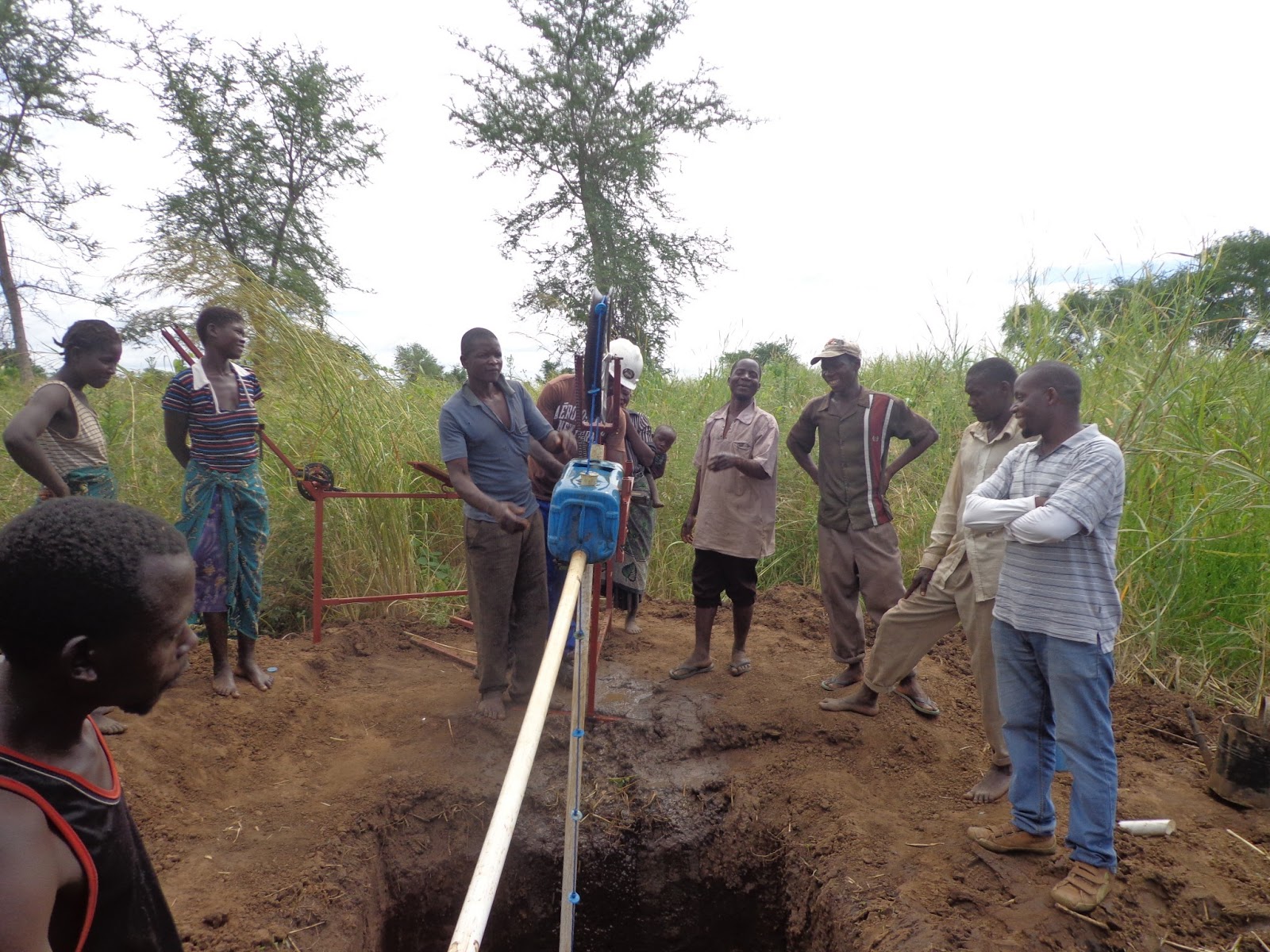
Salima, a lakeshore district, is an exceptionally windy area. The potential for wind power is known by some local village residents. One such resident has constructed his own windmill not far from our Siyasiya irrigation site. When we venture into the area we always stop by his windmill to see what progress he has made. On our last trip we brought him some PVC turbine blades to improve the efficiency of his design. He was able to get some consistent voltage from the attached bicycle dynamo but not enough to light his house. As he refines the design, we will give him any advice and assistance we can.

More windmill to come as the 

Saturday, April 27, 2013

Brick water tank at Katsumwa

On Thursday we joined with farmers at Katsumwa to lay the brick wall on the slab we poured back in March. The farmers put a lot of work into the project and we really appreciate that. The tank will be approximately 15,000 liters capacity when finished later next week.


Thursday, April 25, 2013

Siyasiya irrigation training

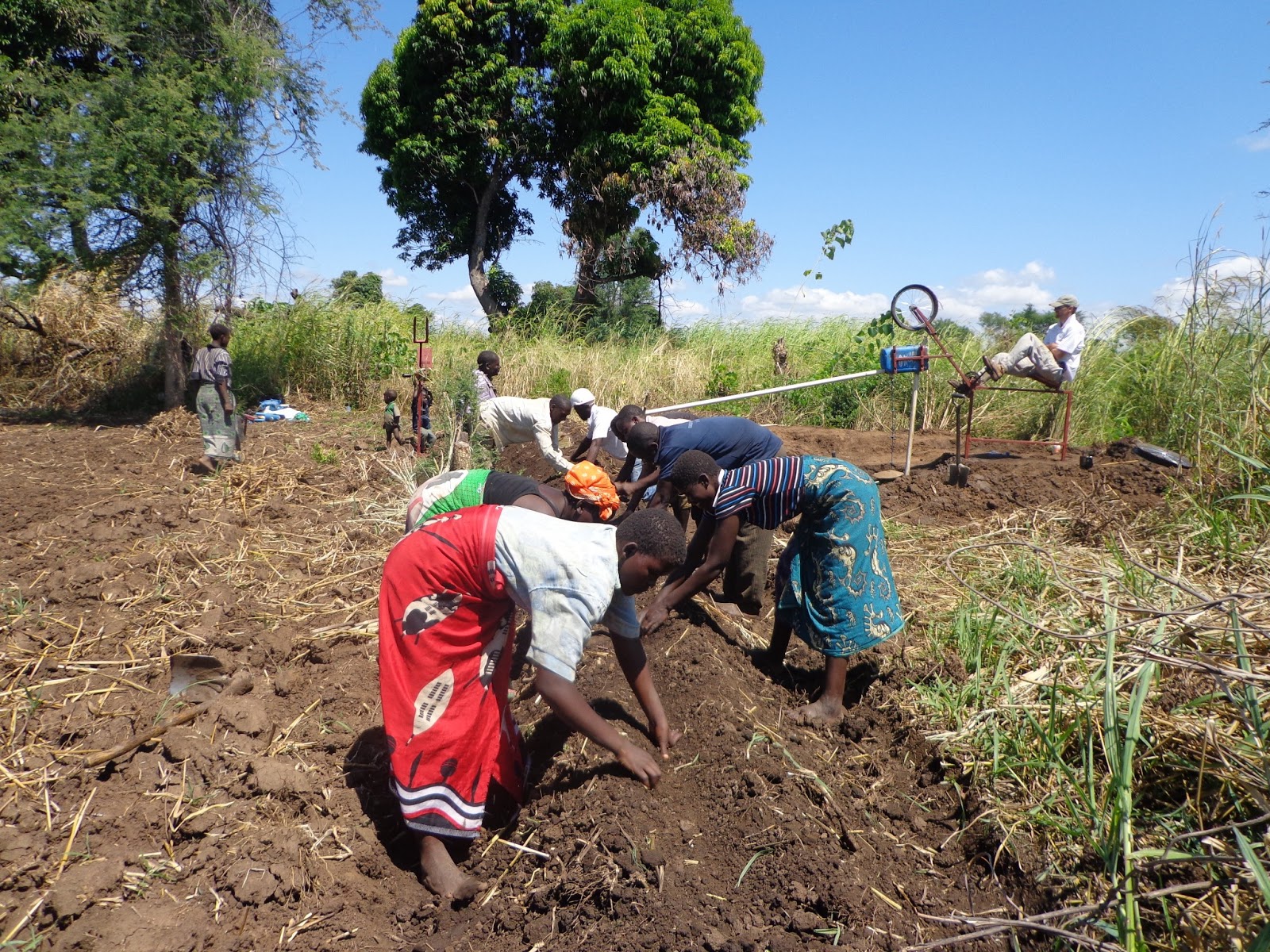
Last week, we went to Siyasiya in Salima to train farmers in basin irrigation. We were invited by World Relief international who support Ministry Teams from local churches in development and relief projects in the area.

The group picked up the ideas and techniques quickly and had a quarter acre ready for planting by the time we left. Over the next two weeks they will expand their garden up to 2-3 acres, where they will grow onions, tomatoes, maize and green vegetables.


Tuesday, April 16, 2013

Getting Ready For Growth

The Mziza Farming Club is getting into irrigation as early as possible this season. On Monday this week, we delivered farm inputs which the farmers accessed through a revolving fund for input loans.

In order to access the loan, a farmer was required to participate in irrigation training and plant at least two season under the new irrigation techniques. Farmers who proved that they could be successful irrigation farmers could then apply to receive inputs to expand the size of their irrigated gardens.

Each member will pay back the loan over two consecutive planting cycles this season. In this way, the loss of capital incurred by paying back the loan is mitigated by the extra income of the second planting. In other words, with two planting cycles it is easier to balance the crop yield between: 1) paying back the loan, 2) eating a balanced diet at home, and 3) using income for other purposes (e.g. paying school fees).


Grass Mat Making at Mziza

Not just an outstanding lead farmer, our good friend Mr. Store is also an expert mat maker.

We stumbled upon his craft before a meeting with the Mziza Farming Club.


Saturday, March 2, 2013

Local Design Windmill

On the return journey of a recent field trip to irrigation sites in the Malawian lakeshore district Salima, we practically stumbled upon a local windmill. Tucked behind an acacia grove, so invisible to the many cyclists and motorists passing by, a recent high school graduate had been busy making his dream machine: a windmill generator/water pump.
He had heard we passed by on our way to the field and waited by the roadside four hours until we returned. Before we could get back on the tarmac and drive away oblivious to his invention, he flagged us down and directed us to his home and the 30' tower made from eucalyptus globulus (blue gum) poles.
While the unit did not generate electricity yet, he was preparing to mount a bicycle dynamo to the wheel. We gave him some pointers to help him understand what was happening. He could really understand the kind of power he was looking for and how his design might not work.
Before leaving we gave the best encouragement we could, don't give up, etc., (knowing that this kid probably didn't need any more encouragement than his own ambition). In the car again, we discussed what we could do to help. We came up with a few designs we could build in the workshop and bring back to show him next month. Of course we hope he will also have some improvements by then.

These gems are found throughout the world if only we could find them all!

Composting round 2


Even as a club, making a heap of compost and manure like this is tiring, especially during nthawi ya njala (that is, time of hunger: the colloquial name for the months of January-March). Caloric intake is down, but so are traditional work loads; cultivation is finished, harvesting is pending, and there's little to do on the farms, traditionally. But modern farming, sustainable farming, is a year round endeavor.
The farmers get tired but just when they seem to be giving up, we start talking about what this pile of animal droppings is worth in fertilizer equivalent. First we ask the farmer's what they would charge for this work if they were hired piece workers on someone's farm. The job usually ticks in at about K4,000-K5,000 kwacha. Then we explain that this heap of manure will yield roughly 1 metric ton of compost, enough to supply the nutrients required to grow one quarter acre of corn. Corn, as we all know, requires 200kg of inorganic fertilizer per acre, or 50kg per quarter acre, which costs about K15,000. Thus, the fertilizer equivalent of the compost costs three times more than they would charge for the labour to prepare the compost.


Of course, if you do it wrong, this compost could have a low nutrient content or take ages to decompose into a usable substance. No one said it didn't take some skill. But it is worth the effort, and the farmers tend to pick up their feet a bit higher once they can quantify the fruits of their labour.
So far we have seen some very good work from farmers and we look forward to seeing how far they take the skills when we are not around to watch each step.